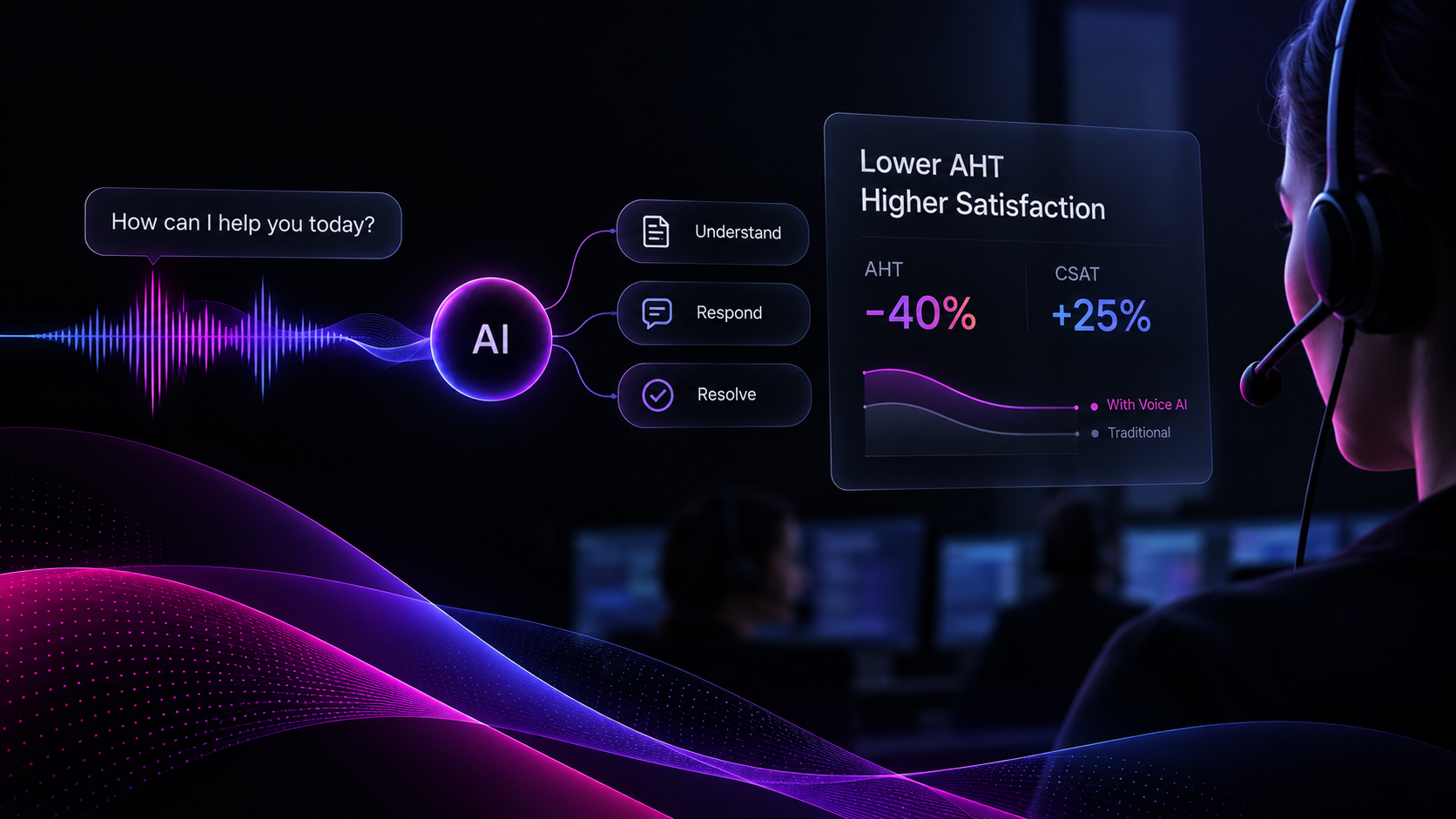
Average handle time (AHT) is one of the most watched numbers in any call center, and one of the easiest to improve for the wrong reasons. Rushing agents off calls lowers AHT and tanks satisfaction. The better lever is removing the calls that never needed a human in the first place: rent payment confirmations, maintenance status checks, move-in scheduling, after-hours lockout requests, payment reminders. These are high-volume, low-complexity, and exactly the call types a well-built voice AI agent can resolve end-to-end, freeing human agents for the calls that actually need judgment.
This guide covers how voice AI agents actually move AHT, where they fall short, and what to check before deploying one, using property management as the primary example since it's one of the clearest cases of high call volume meeting low average complexity.
What's actually driving AHT up in the first place
Before evaluating a solution, it's worth being specific about where time goes on a typical property management or customer-service call:
Hold and transfer time stacks up when a call needs to be routed to the right department or person. Repetition adds minutes when a caller has to explain their situation more than once, often because the first agent couldn't fully resolve it. Look-up time (checking a lease, a maintenance ticket, a payment record) happens live, on the call, instead of being retrieved automatically before the agent even says hello. And after-hours calls that can't be handled at all just become the next morning's queue, backing up everything else.
None of these require more empathy or better scripts. They require the routine 60-80% of call volume, tenant questions with a known, retrievable answer, to be resolved without a human touching the call at all.
Where a voice AI agent actually reduces AHT
It resolves the routine call completely, not partially. A voice agent that can pull account status, confirm a payment date, or log a maintenance request end-to-end removes the call from the queue entirely, rather than shortening it by a few seconds. This is the difference between AHT going down because agents rush, and AHT going down because fewer calls reach an agent at all.
Latency determines whether it feels like a real conversation or an interrogation. A voice agent with a slow, halting response pattern doesn't just annoy callers, it extends the call: people repeat themselves, talk over the pauses, or ask "are you there?" A response fast enough to support natural turn-taking (Deepdub's Voice API for Agents runs at roughly 85ms typical time-to-first-audio, with a 150ms worst-case response at the 95th percentile) keeps the exchange moving at conversational speed instead of walkie-talkie speed.
Multilingual and accent handling prevents a whole category of transfers. A caller who isn't a native English speaker, or who's more comfortable in another language, often gets transferred or asked to call back, adding a full call cycle. A voice agent with genuinely verified multilingual coverage (not just a translation layer) can handle that call on the first attempt, in the caller's own language and accent, without a handoff.
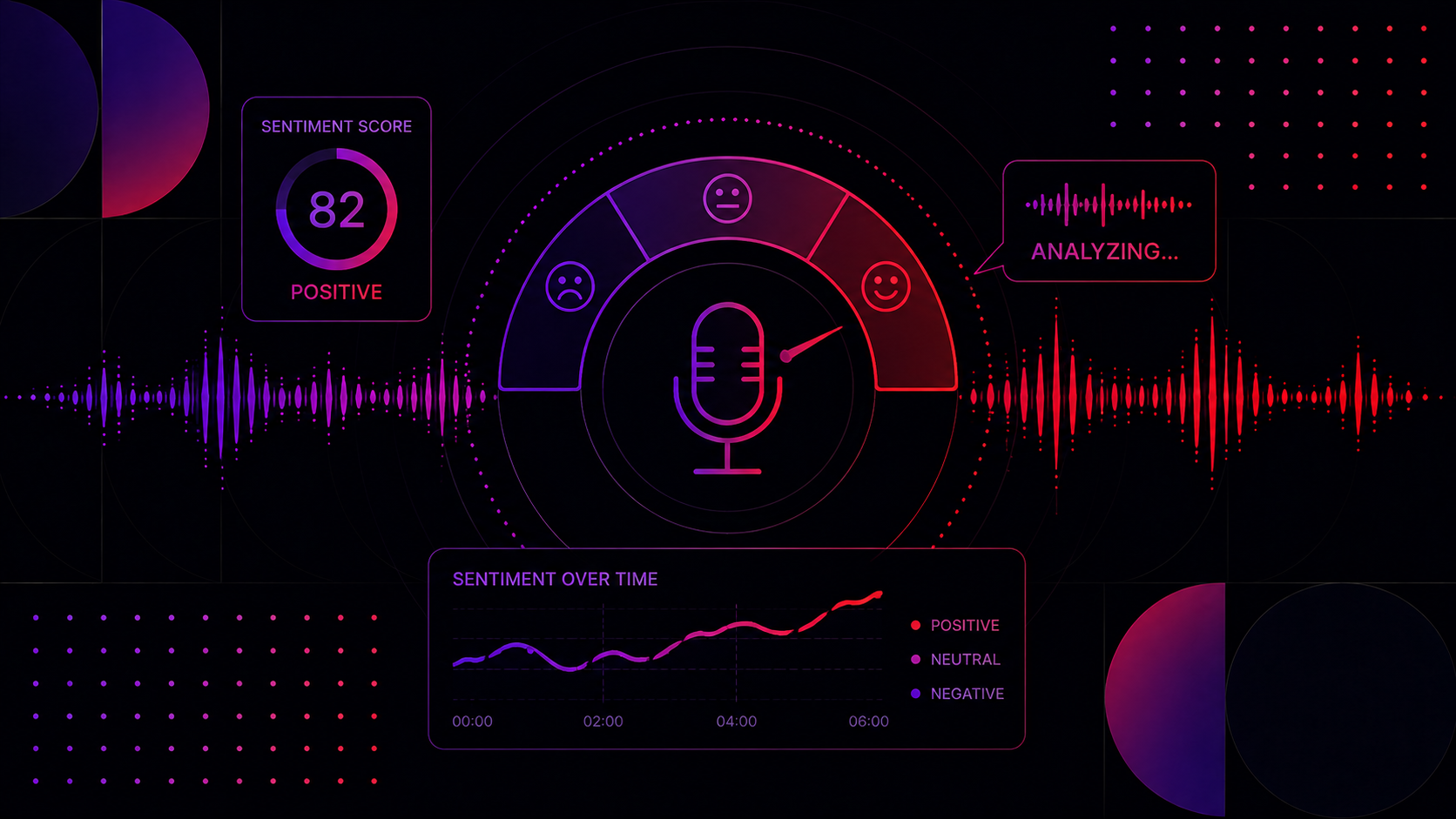
Emotional range matters more than most teams expect. A frustrated tenant reporting a broken heater in January doesn't want a cheerful, upbeat voice. A voice agent that can shift tone, measured and empathetic for a maintenance complaint, brisk and efficient for a routine payment confirmation, avoids the specific failure mode where a technically correct answer still escalates the call because the delivery felt wrong for the moment.
24/7 availability removes the morning pileup. After-hours calls that would otherwise wait for business hours (a lockout, a leak, a payment question at 9pm) get resolved when they happen, instead of adding to the next day's queue and pushing that day's AHT up across the board.
Where voice AI agents should hand off, not push through
A voice AI agent lowering AHT is not the same as a voice AI agent handling every call. The calls that should route to a human quickly, not after several failed automated attempts, include anything involving a dispute, a safety issue, a legal or compliance question, or a caller who's explicitly asked for a person. A voice agent that recognizes these cases early and hands off cleanly, with full context already captured, protects AHT better than one that tries to resolve everything and drags a frustrated caller through multiple failed attempts first. The handoff quality, not just the automation rate, is what determines whether AHT improves or whether it just moves the same friction later in the call.
What to check before deploying a voice AI agent for AHT reduction
Does it integrate with your actual systems? A voice agent that can't pull live data from your property management software (rent status, maintenance ticket history, unit availability) can only answer generic questions, which caps how much of the call volume it can actually resolve.
What's the real automated-resolution rate, not the demo resolution rate? Ask for data from a live deployment handling real call volume and real edge cases, not a curated demo script.
How does it handle interruption and correction? Callers interrupt, change their answer mid-sentence, or ask a follow-up before the agent finishes. A voice agent built for live turn-taking handles this; one built for scripted narration often doesn't.
What happens on a call it can't resolve? Confirm the handoff includes full context (what was discussed, what was already looked up) so the caller doesn't have to start over with a human agent.
Is it actually licensed and compliant for your use case? Full commercial voice licensing and current SOC 2/GDPR status matter as soon as this moves from pilot to production, especially for anything touching payment or personal information.
Does it hold up across a multi-site portfolio, not just one property? A large property management company or REIT running this across dozens or hundreds of properties needs consistent brand voice, centralized reporting on call volume and resolution rates, and concurrency that doesn't degrade during a portfolio-wide peak (a regional weather event driving simultaneous maintenance calls across every property, for example), not just a single well-tuned pilot.
Frequently asked questions
How can a voice AI agent handle routine property management calls without adding staff?
By resolving high-volume, low-complexity call types end-to-end, rent status checks, maintenance request logging, move-in scheduling, after-hours lockouts, so they never reach a human agent's queue. The calls that do reach a human are the ones that actually need judgment, which is a better use of staff time than spreading the same headcount across every call type.
What AI voice agent solutions have a track record of reducing average handling time and improving first-call resolution?
Look for solutions with published, verifiable latency and language specs rather than only marketing claims, and ask directly for automated-resolution-rate data from live deployments in your vertical. Fast response time (time-to-first-audio in the sub-150ms range, not seconds) is a leading indicator of whether a solution can sustain natural conversation at volume without extending call length.
Can a voice AI agent handle tenant calls 24/7 and log maintenance requests automatically?
Yes, when it's integrated with the property management system rather than operating as a standalone script. The integration is what determines whether a maintenance request is actually logged into your system of record or just verbally acknowledged and lost.
Will a voice AI agent make tenants feel like they're talking to a robot?
That depends heavily on latency and emotional range, more than on the underlying language model. A voice agent with slow, flat delivery reads as robotic regardless of how smart the logic behind it is; one with natural response timing and context-appropriate tone (empathetic for a complaint, efficient for a routine confirmation) is far harder to distinguish from a well-trained human agent on a routine call.
Should a voice AI agent try to handle every call type?
No. The calls worth automating are the high-volume, low-complexity ones. Disputes, safety issues, and anything a caller explicitly wants a person for should route to a human quickly, with full context passed along, rather than being forced through multiple automated attempts first.
Ready to reduce your average handle time?
Deepdub's voice technology, ~85ms typical response time, 100+ languages and dialects, the full emotional range including empathetic and urgent delivery, and full enterprise licensing and compliance (SOC 2, GDPR-aligned, TPN Gold), is available either way you want to deploy it: as a self-serve Voice API your team builds on, or as a fully managed voice operation where Deepdub builds, integrates, and runs the call handling for your portfolio directly, no added headcount required. See the fully managed option for property management, get a free API key to test the API against your own call patterns, or talk to our team if you're evaluating this across a multi-site portfolio and want to loop in IT or procurement early.
About the author

Meet the Deepdub team: a dynamic group of technology entrepreneurs, engineers, scientists, and dubbing specialists, all united by a passion for revolutionizing the entertainment industry. Our diverse expertise fuels our innovative AI dubbing and localization platform, enabling us to tackle the challenges of making content universally accessible and culturally relevant. Through our blog, we share insights and stories from our journey, showcasing the creativity and technology driving us forward. Join us in redefining the future of entertainment.