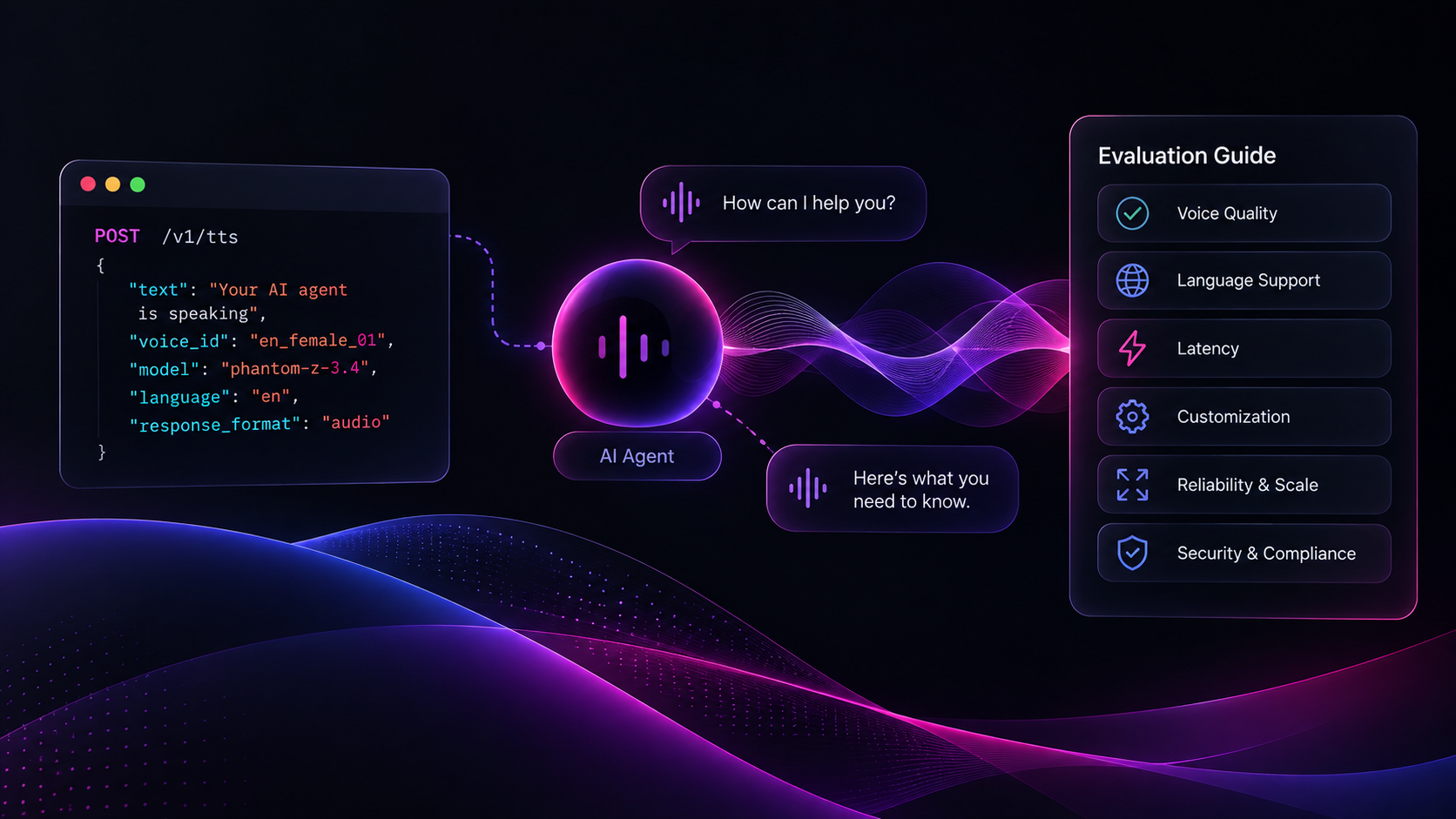
Debt collection has quietly become one of the more demanding use cases in enterprise voice AI. It sits at the intersection of three things that are each hard on their own: strict regulation, a borrower population that is often stressed or defensive, and a business model where a single misstep, a missed disclosure, a call at the wrong hour, an opt-out that does not stick, can turn into a regulatory complaint rather than just a bad customer interaction.
That combination is why "AI debt collection platform" has become a crowded search term without a lot of clear answers underneath it. Some vendors are selling a dialer with a chatbot bolted on. Others are selling a full compliance-aware voice operation. The differences matter a lot more here than in most contact center categories, and they are not always obvious from a homepage.
This guide lays out what actually separates these platforms, so a procurement or operations team evaluating this category knows which questions to ask before a demo turns into a contract.
What "AI debt collection platform" actually covers
The term gets used for a wide range of products. At one end are dialer-and-script tools that route calls and give live agents a suggested script, with AI limited to routing or basic analytics. At the other end are platforms that run outbound and inbound collections conversations autonomously, using conversational voice AI to negotiate payment plans, answer questions about a balance, and hand off to a human agent only when a call needs one.
The distinction matters because the compliance burden differs sharply between the two. A tool that assists a live human agent inherits that agent's judgment for edge cases. A platform that runs the conversation autonomously has to encode compliance judgment into the system itself: when to disclose, when to stop calling, how to handle a dispute, how to log consent. Evaluating "AI debt collection platforms" as a single category without asking which of these two things a vendor is actually selling is the most common mistake buyers make.
The compliance layer is not optional, and it is not generic
Consumer debt collection in the United States is governed by a specific and fairly unforgiving set of rules, and any platform that runs live conversations with borrowers needs to be built around them rather than have them added afterward.
The Fair Debt Collection Practices Act sets rules on when and how often a collector can contact a consumer, what has to be disclosed, and what language and tactics are off-limits. The Telephone Consumer Protection Act separately governs how automated or AI-driven calls can be placed at all, including consent requirements. Regulation F, the CFPB's more recent rule implementing parts of the FDCPA, adds specific cadence limits, generally capping certain contact attempts per week per debt, and clarifies how electronic communication and opt-outs need to be handled.
For a platform to be genuinely built for this use case, that regulatory logic needs to live inside the call flow itself, not in a separate compliance manual nobody reads during a live call. Concretely, that means the system delivers required disclosures such as the mini-Miranda warning consistently and correctly, respects call-frequency limits automatically rather than relying on a human to track them, and captures and honors opt-outs in a way that actually stops future contact rather than just logging a preference. Deepdub's debt collection offering, for example, is built to be FDCPA-compliant by design, TCPA compliant, and aligned with Reg F's cadence rules, with mini-Miranda disclosures and opt-out handling built into the conversation flow rather than layered on top of it (see deepdub.ai/solution/debt-collection for the specifics). Regulatory requirements shift over time, and the practical question to ask any vendor is not just "are you compliant today" but "what is your process for updating scripts and logic when FDCPA, TCPA, or Reg F requirements change."
Voice quality is a compliance and conversion issue, not just a UX preference
It is tempting to treat voice quality as a polish item, something that matters for brand perception but not for outcomes. In debt collection specifically, that is a mistake for two separate reasons.
First, on the compliance side, a borrower who cannot easily understand a mechanical-sounding or laggy AI voice is more likely to hang up before a required disclosure is fully delivered, or to dispute later that they understood what they agreed to. Latency matters here too: a voice agent with a noticeable delay between the borrower speaking and the system responding reads as robotic and erodes trust in a conversation that is already emotionally loaded for the person on the other end. Deepdub's underlying voice infrastructure targets around 85 milliseconds typical time-to-first-audio, with a 150 millisecond p95 figure for real-time end-to-end response, output at full 48kHz audio rather than a compressed telephony-grade signal, so responses land close to conversational speed rather than with the noticeable lag common in AI voice systems.
Second, on the outcome side, tone and pacing genuinely affect whether a borrower stays on the line and works out a payment plan versus disengaging entirely. A voice agent that can register when a conversation is getting tense and adjust pacing or hand off to a human, rather than plowing through a script regardless of how the person sounds, tends to produce better resolution rates than a flat, one-speed script reader.
Deployment model: API, orchestration platform, or managed operation
This is the question that gets skipped most often, and it is arguably the most consequential one for a procurement team, because it determines what your organization is actually buying and who is accountable when something goes wrong.
Some vendors sell a raw voice API or text-to-speech engine: fast, high-quality audio generation that a development team wires into their own call logic, compliance rules, and CRM integration. Others sell a no-code orchestration platform: a builder for constructing voice agent flows without writing the underlying speech model yourself, but you or your team still own the operation, the compliance configuration, and the ongoing tuning. A third model is a fully managed voice operation, where the vendor builds, integrates, and runs the collections calling program directly against your loan or account data, and your team manages outcomes and exceptions rather than the day-to-day operation of the voice agent itself.
Deepdub operates across two of these models rather than being locked into one. Its Voice API for Agents is a developer-facing API that internal teams or partners can integrate into their own collections stack. Separately, Deepdub also runs a fully managed voice operation for debt collection, building and operating the calling program directly so a collections team adds zero incremental headcount to run it. This is a distinct capability from company to company: some platforms only do managed orchestration without a real underlying voice model of their own, others only offer a raw API with no operational support. Worth asking directly in any evaluation which side of that line, or both, a given vendor actually occupies.
Security and data handling for financial data
Debt collection platforms handle sensitive financial and personal data by definition, so the standard enterprise security bar applies: SOC 2 attestation, ideally Type II rather than Type I since it demonstrates controls operating effectively over a period of time rather than at a single point, and alignment with GDPR-style data protection principles for any consumer data covered by those rules. Deepdub holds SOC 2 Type II and is GDPR-aligned, which covers the baseline most procurement teams look for before clearing a vendor to handle financial and personal data. Any healthcare-adjacent claim, such as HIPAA or a Business Associate Agreement, should be confirmed directly with a vendor for the specific use case rather than assumed from general enterprise security language, since HIPAA obligations are use-case specific and not automatically covered by SOC 2 or GDPR alignment alone.
A practical evaluation checklist
Before signing with any AI debt collection platform, it is worth walking through the same short list of questions regardless of how polished the sales demo is. Ask whether the vendor is selling an API, an orchestration tool, or a managed operation, and whether that matches what your team actually wants to own. Ask how FDCPA, TCPA, and Reg F requirements are encoded into the conversation flow itself, not just described in a compliance document, and how the vendor keeps that current as rules change. Ask about latency and audio quality with a live call, not a recorded demo, since scripted demos tend to mask exactly the lag and quality issues that show up in production. Ask what security attestations the vendor holds and whether they have been independently audited or are self-reported. And ask directly about anything the vendor implies but does not explicitly state, particularly around healthcare-adjacent compliance claims, since implied compliance is not the same as certified compliance.
Frequently asked questions
Is an AI voice agent legally allowed to collect debt on my behalf? Yes, subject to the same FDCPA, TCPA, and Reg F requirements that apply to human-operated collections calling, plus the specific consent requirements TCPA imposes on automated calling technology. The legal obligation sits with the creditor or collector engaging the platform, so the platform's compliance design is a risk-management question for your organization, not just a vendor feature.
What is the difference between Reg F and the FDCPA? The FDCPA is the foundational federal law governing debt collection practices, covering disclosures, prohibited conduct, and consumer protections broadly. Regulation F is a more recent CFPB rule that implements and clarifies specific parts of the FDCPA, including limits on contact frequency and requirements around electronic communication and opt-outs.
Can an AI voice platform replace human collections agents entirely? Most deployments use AI to handle high-volume, lower-complexity contact, payment reminders, basic payment plan setup, balance inquiries, while routing disputes, hardship cases, and complex negotiations to human agents. A well-designed platform hands off cleanly rather than trying to force every conversation through automation.
Does SOC 2 compliance mean a platform is HIPAA compliant? No. SOC 2 and HIPAA are separate frameworks covering different things, and SOC 2 attestation does not by itself establish HIPAA compliance or the existence of a Business Associate Agreement. If a debt collection program touches health-related debt or data, confirm HIPAA and BAA status directly with the vendor for that specific use case.
Where Deepdub fits
Deepdub's debt collection offering combines the voice infrastructure, latency, audio quality, emotional range, and cross-language voice cloning, with a compliance design built specifically for FDCPA, TCPA, and Reg F requirements, delivered either as a developer-facing Voice API for Agents or as a fully managed calling operation. To see the specifics of the managed debt collection offering, visit deepdub.ai/solution/debt-collection, or explore the underlying Voice API for Agents at deepdub.ai/voice-api-for-agents and the technical documentation at docs.deepdub.ai.
About the author

Meet the Deepdub team: a dynamic group of technology entrepreneurs, engineers, scientists, and dubbing specialists, all united by a passion for revolutionizing the entertainment industry. Our diverse expertise fuels our innovative AI dubbing and localization platform, enabling us to tackle the challenges of making content universally accessible and culturally relevant. Through our blog, we share insights and stories from our journey, showcasing the creativity and technology driving us forward. Join us in redefining the future of entertainment.